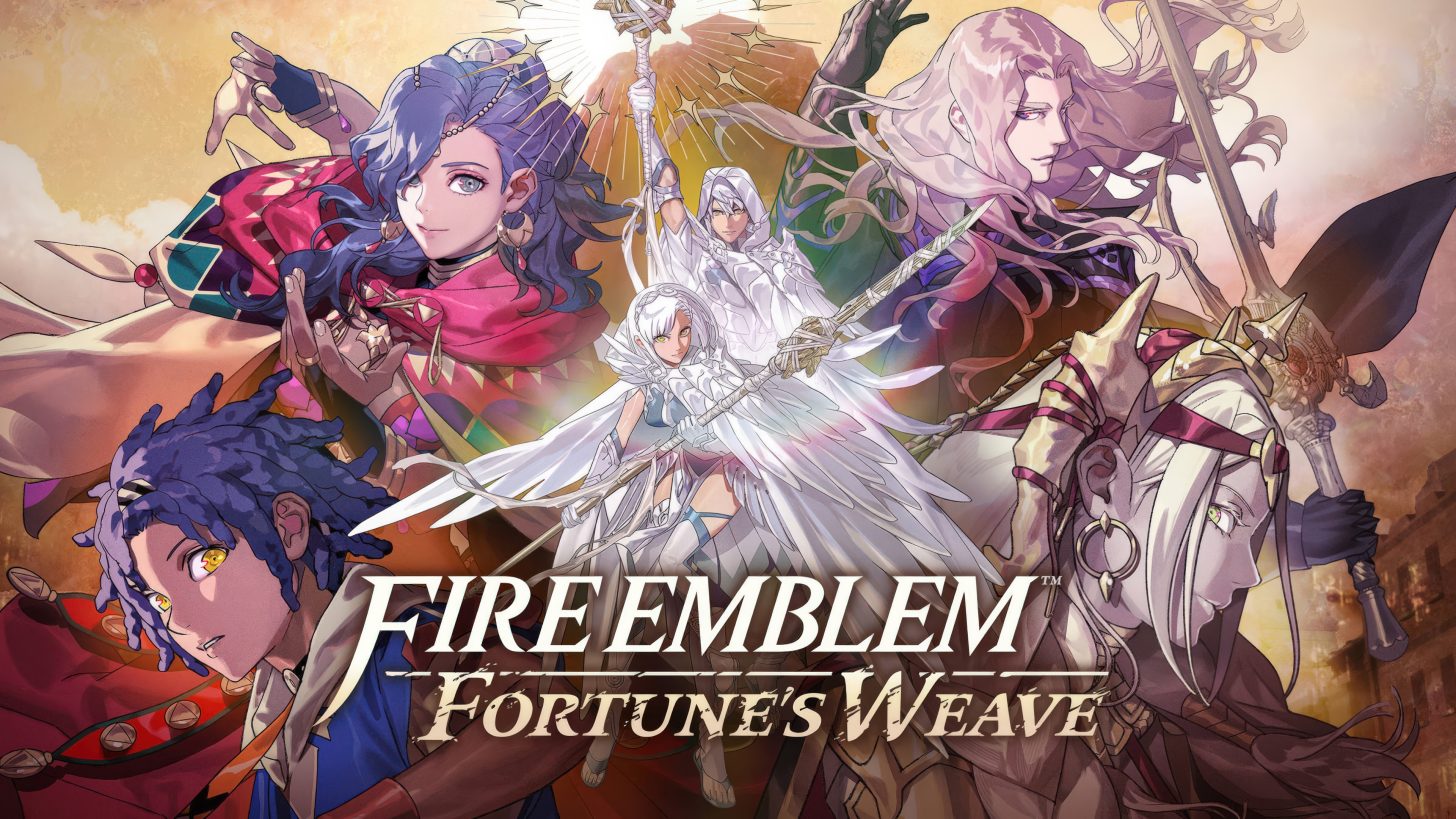
Nintendo and Intelligent Systems have officially unveiled Fire Emblem: Fortune’s Weave, marking the latest mainline installment in one of gaming’s most beloved tactical RPG franchises. Revealed in September 2025 as an exclusive title for the Nintendo Switch 2, this ambitious new entry represents a significant evolution for the series, introducing innovative time-travel mechanics and a multi-protagonist narrative structure that promises to deliver an unprecedented level of player agency and replayability.
The announcement has generated substantial excitement among fans who have eagerly awaited a new Fire Emblem title since 2023’s Engage. Fortune’s Weave appears to be pushing the boundaries of what players can expect from the franchise while maintaining the core tactical gameplay elements that have defined the series for over three decades.
A New World: The Dagdan Empire and the Demon God Balor
Fortune’s Weave transports players to an entirely new setting: the divine Dagdan Empire, a realm steeped in mythology and ancient power. The narrative centers on a high-stakes contest that promises to grant a single wish to its victor—a premise that draws clear inspiration from Celtic mythology, as evidenced by the demon god Balor, who features prominently in Irish folklore as a destructive deity of the Fomorians.
The revival of Balor serves as the catalyst for a devastating war that engulfs the empire, forcing the game’s protagonists into a conflict that spans both space and time. This mythological foundation represents a departure from previous Fire Emblem settings, which have typically drawn from European medieval and Renaissance influences. The incorporation of Celtic elements suggests a richer, more diverse world-building approach that could set Fortune’s Weave apart from its predecessors.
Revolutionary Gameplay: Four Protagonists and Time-Travel Mechanics
Perhaps the most groundbreaking aspect of Fortune’s Weave is its innovative narrative structure built around four distinct protagonists. Unlike traditional Fire Emblem games that follow a single hero’s journey, this installment allows players to experience the story through multiple perspectives, with each character’s path available to play separately. The time-travel mechanics enable players to revisit and potentially alter events they’ve already witnessed, adding layers of strategic depth to both storytelling and gameplay.
This approach bears some resemblance to Fire Emblem: Three Houses, which offered branching paths based on the player’s choice of allegiance. However, Fortune’s Weave appears to take this concept significantly further by integrating time manipulation as a core gameplay element rather than merely a narrative branching point. The ability to revisit past events could have profound implications for tactical planning, relationship building, and story outcomes.
The series’ trademark grid-based, turn-based combat system remains intact, ensuring that longtime fans will find familiar strategic challenges. Fire Emblem has always distinguished itself through its emphasis on unit positioning, weapon triangles, and the permanent consequences of fallen allies—elements that have defined the franchise since its 1990 debut on the Famicom.
City-Building and Social Elements
Reports indicate that Fortune’s Weave will incorporate city-building mechanics alongside its tactical battles, suggesting a return to the hub-world concepts that proved popular in Three Houses and its Garreg Mach Monastery. These social simulation elements have become increasingly important to the Fire Emblem formula, allowing players to develop relationships between characters, manage resources, and prepare for upcoming battles in a more immersive setting.
The integration of city management with time-travel mechanics opens intriguing possibilities for gameplay. Players might be able to see how their decisions affect the development of settlements across different time periods, or use temporal mechanics to optimize their strategic preparations before crucial battles.
Switch 2 Exclusivity and Technical Prospects
As a Nintendo Switch 2 exclusive, Fortune’s Weave is positioned to showcase the capabilities of Nintendo’s next-generation hardware. The original Switch brought us Fire Emblem: Three Houses and Engage, both of which pushed the console’s limits with increasingly detailed character models and expansive battlefields. The Switch 2’s enhanced processing power should enable even more ambitious visual presentation, larger battle maps, and potentially more complex AI behavior for enemy units.
The Fire Emblem series has sold over 10 million copies worldwide, with Three Houses alone moving more than 4 million units. This commercial success has elevated Fire Emblem from a Japan-centric franchise to a global phenomenon, making Fortune’s Weave one of the most anticipated exclusive titles for Nintendo’s new platform.
Expert Opinion: Fire Emblem: Fortune’s Weave represents Nintendo’s boldest strategic gamble with the franchise in years. The combination of time-travel mechanics and multi-protagonist storytelling could revolutionize tactical RPG design if executed properly, potentially influencing the genre for years to come. Given Intelligent Systems’ track record and the resources available on Switch 2 hardware, Fortune’s Weave is positioned to become not just a system-seller, but possibly the definitive Fire Emblem experience for a new generation of players.