
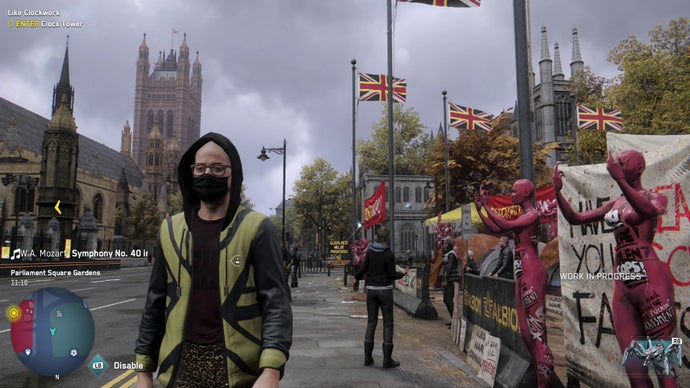
The European Union’s landmark AI Act has introduced comprehensive deepfake transparency rules that are creating an unexpected ripple effect across the video game industry. While many associate deepfakes primarily with manipulated videos of politicians or celebrities, the legislation’s scope extends far beyond these obvious examples. Game studios across Europe and those distributing products in EU markets are now grappling with what these new requirements mean for their creative processes and the increasingly sophisticated AI tools they employ in game development.
The obligation outlined in the EU AI Act covers a remarkably broad range of AI-generated and AI-manipulated content, catching many in the gaming industry off guard. This has prompted widespread concern among game developers that AI-generated assets—from character faces to environmental textures—might fall under regulatory scrutiny or even be prohibited outright. However, recent guidance from EU authorities suggests that several common applications of artificial intelligence in game development are unlikely to fall within the legislation’s scope, offering some relief to worried studios.
Understanding the Scope of EU AI Act Deepfake Rules
The EU AI Act, which began its phased implementation in 2024, represents the world’s first comprehensive legal framework specifically designed to regulate artificial intelligence. The deepfake provisions within this legislation require that any AI-generated or substantially AI-manipulated content depicting real people, places, or events must be clearly labeled as artificial. This transparency requirement aims to combat misinformation and protect individuals from having their likenesses used without consent in misleading contexts. For the gaming industry, which has increasingly relied on AI tools for everything from facial animation to procedural content generation, these rules introduce new compliance considerations that didn’t exist even a few years ago.
The legislation distinguishes between content that could reasonably be mistaken for authentic documentation of reality and content that is clearly fictional or artistic in nature. Video games, by their inherent nature as entertainment products, generally fall into the latter category. However, the growing photorealism of modern games and the use of real-world locations, licensed likenesses of actual people, and historically accurate settings creates potential grey areas that studios must navigate carefully. Games featuring realistic depictions of real cities, historical figures, or contemporary celebrities face the most significant compliance questions under the new framework.
The Grey Areas Between Fantasy and Realism
The real complexity for game developers lies in determining where fantasy ends and potentially problematic realism begins. Sports games that use licensed likenesses of real athletes, racing games featuring actual cities and landmarks, and historical games depicting real political figures all occupy uncertain territory under the new regulations. When AI tools are used to generate or enhance these realistic depictions—whether through facial animation, voice synthesis, or environmental modeling—studios may need to consider whether disclosure obligations apply. The situation becomes even more nuanced when games blend fictional narratives with authentic real-world settings, a common practice in open-world and action-adventure titles.
Industry legal experts have noted that context matters significantly in interpreting these rules. A clearly fantastical game world featuring AI-generated content is unlikely to trigger disclosure requirements, even if that content is photorealistic in quality. Conversely, a game that uses AI to create convincing footage of a real political figure making statements they never actually made would almost certainly require labeling under the legislation. Between these extremes lies a spectrum of use cases that studios must evaluate on an individual basis, potentially in consultation with legal counsel familiar with both gaming industry practices and EU regulatory requirements.
Industry Response and Compliance Strategies
Major game publishers have begun implementing compliance frameworks in response to the EU AI Act, though approaches vary significantly across the industry. Some studios have opted for broad disclosure policies that label any AI-assisted content creation, viewing this as a conservative approach that minimizes regulatory risk. Others have conducted detailed assessments of their AI tool usage to determine which specific applications might fall under the legislation’s scope. Industry associations have been actively engaging with EU regulators to seek clarification on edge cases and advocate for interpretations that preserve creative flexibility while achieving the legislation’s consumer protection goals.
The timing of these regulations coincides with an explosion of AI adoption in game development, making compliance planning particularly challenging. Tools for AI-assisted character creation, dialogue generation, and procedural world-building have become increasingly sophisticated and widely adopted over the past two years. Studios that have integrated these technologies deeply into their development pipelines now face the task of auditing their processes and potentially modifying workflows to ensure compliance. Smaller independent developers may find these requirements particularly burdensome, as they often lack the legal resources available to major publishers.
Expert Opinion: The EU AI Act’s deepfake provisions will likely serve as a template for similar regulations worldwide, making early compliance investment worthwhile for globally-distributing studios. We anticipate that industry-wide standards for AI content disclosure in games will emerge within the next 18-24 months, potentially through self-regulatory frameworks developed in partnership with regulators. Studios that proactively establish transparent AI usage policies now will be best positioned to navigate this evolving regulatory landscape.