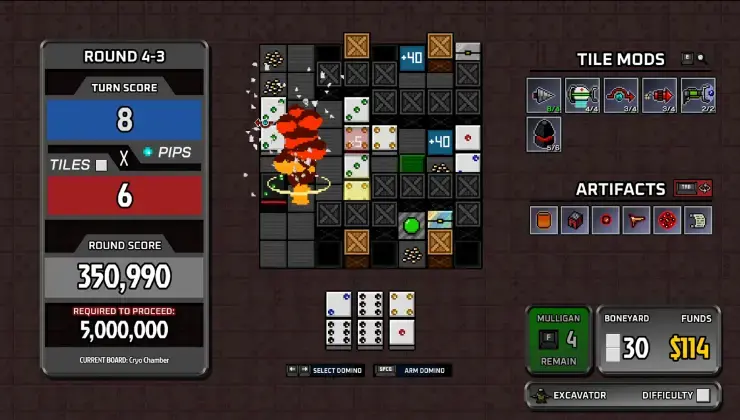
The puzzle roguelike genre continues to evolve with unexpected twists, and the latest entry making waves is Dominocalypse, a game that takes the beloved tile-matching tradition of dominoes and transforms it into a compelling score-chasing experience. While the game clearly draws inspiration from the wildly successful Balatro and numerous other roguelike deck-builders that have captured players’ imaginations in recent years, Dominocalypse manages to carve out its own unique identity through its ingenious implementation of domino mechanics. The result is a fresh take on a formula that has been dominating indie gaming charts, offering players something genuinely new while maintaining the addictive qualities that make the genre so appealing.
The roguelike genre has experienced a remarkable renaissance over the past decade, with developers constantly finding innovative ways to combine procedural generation with various gameplay mechanics. From card-based adventures like Slay the Spire to the poker-themed phenomenon Balatro, which took the gaming world by storm with its clever combination of poker hands and roguelike progression, players have shown an insatiable appetite for games that blend strategic thinking with replayable randomness. Dominocalypse enters this crowded field with confidence, betting that the centuries-old game of dominoes can provide the foundation for yet another compelling roguelike experience.
How Dominocalypse Reinvents Classic Domino Gameplay
The core innovation in Dominocalypse lies in how it transforms traditional domino matching into a roguelike scoring system. Rather than simply connecting matching numbers as in the classic tabletop game, players must strategically place their domino tiles to create chains and combinations that multiply their scores. The game introduces various power-ups, special tiles, and modifier cards that can dramatically alter how dominoes interact with each other, creating opportunities for explosive scoring runs that fans of Balatro will immediately recognize and appreciate. Each run through the game presents different challenges and opportunities, ensuring that no two playthroughs feel identical.
The historical significance of dominoes as a gaming medium adds an interesting layer to Dominocalypse’s appeal. Dominoes originated in China during the 12th century before spreading to Europe in the 18th century, eventually becoming one of the most universally recognized games across cultures worldwide. By choosing this particular game as its foundation, Dominocalypse taps into a deep well of intuitive understanding that most players already possess. The rules of matching numbers feel natural, which allows the game to layer its roguelike complexity on top without overwhelming newcomers to the genre.
The Growing Trend of Analog-to-Digital Roguelikes
Dominocalypse represents a broader trend in indie game development where designers look to traditional tabletop games for inspiration in the digital roguelike space. Following Balatro’s enormous success with poker mechanics, developers have increasingly recognized that familiar game concepts can provide excellent frameworks for roguelike innovation. This approach offers a significant advantage in terms of accessibility, as players arrive with pre-existing knowledge of the base mechanics, allowing developers to focus on creating compelling meta-progression systems and strategic depth rather than teaching entirely new concepts from scratch.
The puzzle roguelike subgenre has proven particularly receptive to this kind of hybridization. Games in this category require players to think several moves ahead while simultaneously adapting to randomly generated scenarios, creating a satisfying blend of planning and improvisation. Dominocalypse embraces this design philosophy fully, challenging players to maximize their scoring potential with each hand of dominoes while building toward larger strategic goals across an entire run. The addition of unlockable content, persistent progression elements, and increasingly difficult challenges ensures that dedicated players will find dozens of hours of entertainment as they chase higher scores and discover new synergies between the game’s various systems.
What This Means for the Future of Indie Gaming
The emergence of games like Dominocalypse signals continued vitality in the indie gaming scene, particularly within the roguelike genre that has proven remarkably adaptable to new ideas. As more developers experiment with bringing traditional games into the digital roguelike format, players can expect to see increasingly creative combinations in the coming years. The success of these titles demonstrates that innovation in gaming doesn’t always require entirely new concepts; sometimes the most compelling experiences come from reimagining familiar favorites through fresh mechanical lenses. For fans of puzzle games, roguelikes, or simply anyone looking for their next addictive gaming experience, Dominocalypse appears poised to deliver something genuinely special.
Expert Opinion: The success of hybrid roguelikes like Dominocalypse suggests we’re entering a golden age for the genre, where designers are mining traditional games for untapped potential. Industry analysts predict that following Balatro’s commercial triumph, we’ll see numerous experiments combining roguelike progression with classic game mechanics, from chess variants to dice-based adventures. The key to standing out, as Dominocalypse demonstrates, lies not merely in the novelty of the combination but in how thoughtfully the traditional mechanics are reimagined for digital play.